
This post may contain affiliate links. Please read my disclosure for more information.
A good credit score means more money in your pocket. It can help you get lower interest rates on loans, mortgages and more, meaning you spend less money.
It also just makes life easier and gives you freedom. You can get approved for loans, credit cards, car purchases and leases and even renting.
On the flip side, a lower credit score will really damage your financial life and place limits on you.
But, the good news is that you can take steps to raise your credit score!
There are some strategies and tactics below that will help you improve your credit and rebuild your financial life.
Some steps can help your score in a few weeks, while others take months of steady habits.
This guide covers simple ways to build credit, fix problems on your report, and keep your score strong over time.
A Step-by-Step Guide to a Great Credit Score
If your credit score is in the doldrums, there are steps you can take to revive it. From credit repair services to credit building apps, you can boost your credit score.
While these steps may not make a difference overnight on your credit report, you will notice your credit improves as long as you stick to completing them.
It may take time, but you can achieve an excellent credit score!
Check Your Credit Reports for Problems

The first step to build credit is looking at your full report and understanding your credit score.
A mistake on your credit report can lower your score even if you pay every bill on time.
You can get free reports from Experian, Equifax, and TransUnion, look for errors or signs of identity theft, and dispute anything that is wrong.
Check out this full guide on understanding how your credit score is calculated.
Get Free Reports From All Three Credit Bureaus
The three major credit bureaus are Experian, Equifax, and TransUnion. Each one keeps its own file on you. Your lenders may not report to all three, so the reports can differ.
The official site for free reports is AnnualCreditReport.com. You can get a free report from each bureau there every week.
Be careful with other sites that look similar, since some charge fees or try to sell you services.
The government site USAGov explains how to get a free copy of your credit report and fix errors.
You also have the right to see and act on your data held by credit reporting companies.
A free credit report does not always include your credit score. Many banks and card issuers show your score for free.
More Reading:
Identify Errors, Unfamiliar Accounts, and Signs of Identity Theft
Go through each report line by line. Mistakes are common, and errors can hurt your score through no fault of your own.
Look for these problems:
| What to Check | Possible Problem |
|---|---|
| Personal details | Wrong name, address, or Social Security number |
| Account status | A paid account listed as unpaid or late |
| Balances and limits | Wrong amounts owed or wrong credit limits |
| Collections | Debts you never owed or debts listed more than once |
| Old negative items | Late payments older than about 7 years still showing |
| Hard inquiries | Credit checks you did not ask for |
Accounts or inquiries you do not recognize may be signs of identity theft.
If you find them, report the fraud at IdentityTheft.gov. You can also place a credit freeze or fraud alert with the bureaus.
Dispute Inaccurate Information
If something is wrong, file a dispute with each bureau that shows the error. You can do this online, by mail, or by phone.
It also helps to contact the company that reported the information, such as your lender or the collection agency.
Your dispute should include:
- Your full name and address
- The account name and number
- A clear reason why the item is wrong
- Copies of proof, such as receipts or bank statements
The bureau usually has 30 days to investigate. If the item is wrong or cannot be verified, it must be fixed or removed. The bureau will send you the results in writing.
The CFPB advises you to check your credit reports and fix errors right away. It can help you get a higher credit score.
Keep copies of every letter and form you send. Be aware that correct negative information, like a real late payment, usually cannot be removed through a dispute.
Tactics to Raise Your Credit Score Quickly
Maybe you had a collection account, or are trying to repair credit after bankruptcy. If your score has really taken a nose-dive, you may need more aggressive strategies to improve credit.
Or, if you are just trying to boost your credit score more quickly than simply making on-time payments, there are some more key tactics to take below.
These are great if your credit score is low and needs intense credit repair.
Need a Way to Build Your Credit? Try the Kickoff App
Kickoff: 74% of Ava members see an improvement in their credit and credit score in less than 7 days! One of the best apps to build credit quickly is Kickoff! Download the app!
Download a Credit Building App
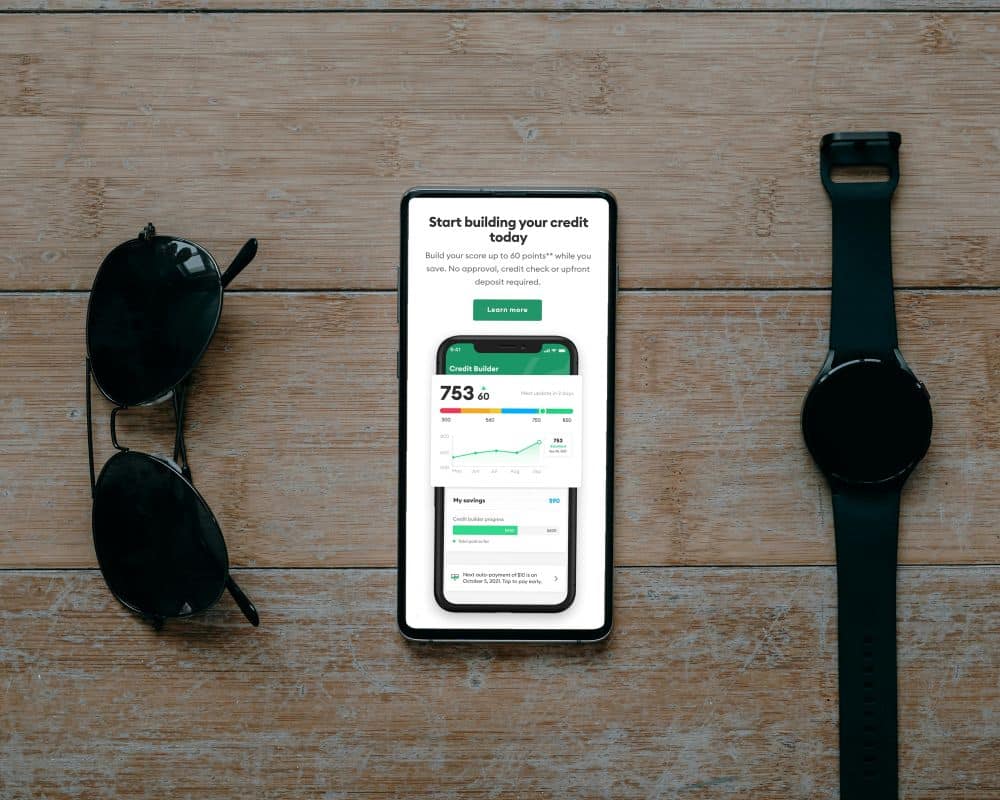
Downloading a credit improvement app to your smartphone could be the first step to building a better financial future!
These apps are built for people with lower credit scores who want to start building credit. They will easily approve you and for a low monthly fee, you get a line of credit to help your credit utilization score.
They also will report payments you already make like rent or utility bills to the 3 credit bureaus, improving your positive payment history.
I have personally used the Kikoff app and highly recommend it!
Get a Credit BUilder Loan
Credit builder loans can be extremely helpful for rebuilding credit. A credit builder loan is a secured loan that is designed to help you in this situation.
You have to pay money into the loan in advance. It might only be part of the full loan however.
But, once you have done that, making monthly payments on this secured loan will start rebuilding credit for you. Here are some options of credit builder loans.
Some credit-building apps like Kikoff have a credit building loan/line of credit built in when you sign up for an account.
One way to help repair your credit quickly is to purchase a tradeline. This adds the credit history of a seasoned, positive account to yours.
Tradeline Supply Company sells these, allowing you to purchase a tradeline and help repair your report and improve your credit score.
If you do opt for a loan, learn mistakes to avoid when applying for loans.
Apply for a Secured Credit Card
If you have poor credt a secured credit card may be easier to get approved for and it can help improve your credit and your credit report.
These cards require that you give them a cash security deposit, in most cases equal to the line of credit.
The secured credit card holder gets to keep your cash deposit as insurance. But, this means they are much easier to get, even with bad credit.
Having and using one of these can help rebuild your credit and raise your credit scores. Here is a list of cards to consider.
Become an Authorized User Or Purchase a Tradeline
If you have family or friends with good credit, you can see if they will let you become an authorized user on their line of credit.
They can officially add your name and social security number as a user of a credit card, the positive history of that card will go on your credit report.
This will help raise your credit score! If you don’t want to ask someone you know, you can also do this same tactic by purchasing a tradeline. (Read more about what a tradeline is.)
It will help improve your credit reputation and add someone else’s good credit habits to your history.
As a result, as long as the credit card issuer confirms payments to the credit agencies, they should appear on both your credit record and their’s.
This simple act of registering as an authorized user on someone’s credit card is an excellent way to repair your credit.
Check out this list of the 5 best tradeline companies.
Protect and Improve Your Payment History

Payment history makes up about 35% of your FICO score and 40% of your VantageScore, so on-time payments matter more than any other habit.
Catching up on overdue bills, setting up autopay, and knowing how late payments and collections are scored can help you protect it.
One of the simplest credit score tips is just to make on-time payments!
Bring Past-Due Accounts Current
If you are behind on any bill, your first step is to pay the past-due amount.
The Consumer Financial Protection Bureau advises that you get current and stay current on missed payments.
Start with accounts that are close to 30 days late. Lenders usually do not report a late payment to the credit bureaus until it is at least 30 days past due. Paying before that point may keep it off your report.
If you cannot pay the full amount, call your lender. Many offer:
- Hardship programs with lower payments for a set time
- Payment plans to spread out the past-due balance
- Due date changes to match your payday
Once an account is current, each new on-time payment adds positive history to your report.
Use Autopay and Reminders to Prevent Missed Payments
Autopay pulls money from your bank account on a set date, so you do not have to remember each due date.
Experian suggests setting autopay for at least the minimum payment so you never miss one.
You can still pay more by hand each month. Just make sure your bank account has enough money to cover the autopay amount.
Other tools that help you pay bills on time:
- Text or email alerts from your card issuer a few days before the due date
- Calendar reminders on your phone
- Multiple small payments during the month, since most card issuers allow payments at any time
More Reading: Credit Saint vs. Lexington Law
Understand How Late Payments and Collections Affect Your Score
A single late payment can drop your score by 60 to 110 points. The drop is often larger if your score was high before.
| Event | How Long It Stays on Your Report |
|---|---|
| Late payment (30+ days) | Up to 7 years |
| Collection account | Up to 7 years from the first missed payment |
Late payments are grouped by how late they are: 30, 60, 90, or more days. Each step does more damage.
Collections happen when a lender sends your unpaid debt to a collection agency. Paying a collection will not always remove it.
However, some newer scoring models, such as FICO 9 and VantageScore 3.0 and 4.0, ignore collections that have been paid.
The impact of older late payments also fades over time as you build a record of on-time payments.
Lower the Credit Card Balances That Get Reported

Your card issuer usually reports one balance to the credit bureaus each month, and that number affects your score more than what you pay later.
Knowing your utilization, timing your payments, picking a payoff plan, and raising your limit carefully can all lower that reported balance.
Calculate Your Overall and Per-Card Utilization
Your credit utilization ratio is the share of your available credit that you are using. How much you owe makes up 30% of your FICO Score, and utilization is a big part of that.
To find it, divide your balance by your credit limit, then multiply by 100. Do this two ways:
| Type | How to Calculate | Example |
|---|---|---|
| Overall | All balances ÷ all limits | $1,500 ÷ $10,000 = 15% |
| Per-card | One card’s balance ÷ that card’s limit | $1,200 ÷ $2,000 = 60% |
Scoring models look at both numbers. One maxed-out card can hurt your score even if your overall rate looks low.
Many experts suggest keeping your credit utilization rate below 30% and ideally under 10%.
Pay Down Balances Before Your Issuer Reports Them
Most issuers report your balance on your statement closing date, not your due date.
So even if you pay in full every month, a high balance on the closing date can still show up on your credit report.
A simple fix is to pay your balance 3 to 5 days before the statement closes. This lowers the number the bureaus see.
You can also:
- Make two or more smaller payments during the month
- Set up autopay for at least the minimum to avoid late payments
- Check your app or statement to find your exact closing date
You do not need to carry a balance to build credit. Keeping a balance only adds interest charges and does not help your score.
Need Credit Repair?
If you need something more aggressive to boost and improve your credit like credit repair, try Sky Blue to help!
Choose a Debt Repayment Strategy
If you have credit card debt on more than one card, a clear plan helps you pay it off faster. Here are common choices:
- Avalanche method: Pay the minimum on every card. Put extra money toward the card with the highest interest rates first. This usually saves the most money.
- Snowball method: Pay off the smallest balance first. Quick wins can help you stay motivated.
- Debt consolidation: Combine balances into one loan, often at a lower rate.
- Balance transfer card: Move debt to a card with a low or 0% intro rate for a set time.
Paying off cards each month also helps you avoid interest and improve your debt-to-income ratio. Since issuers report monthly, you may see score changes within a few months.
Think about a Higher Limit Without Increasing Spending
A credit limit increase lowers your utilization if your balance stays the same. For example, a $1,000 balance on a $2,000 limit is 50%. If your limit rises to $4,000, it drops to 25%.
You can ask your issuer for a higher limit online or by phone. Some issuers do this with a soft check.
Others use a hard inquiry, which may lower your score by a few points for a short time. Ask which one they use before you apply.
This only works if you do not spend more. A higher limit can make it easier to build new debt. Keep your spending the same and use the extra room only to lower your rate.
Keeping old cards open also protects your total limit. Closing a card can raise your utilization because you lose that available credit.
Make New Credit Applications
Sadly, it is often more difficult to obtain new credit when your credit score is low. Especially an unsecured card which most are.
At this time, rates of interest and costs might be increased, which would make it even more difficult to get accepted for new credit.
But, establishing new credit is one way of rebuilding credit and raising your credit score.
To demonstrate that you’re a trustworthy borrower following bankruptcy, it’s important that you apply for new credit.
You can help repair your credit by establishing a solid record of on-time repayments.
When you are having trouble with your creditworthiness, applying for a secured credit card will help build credit.
In addition, getting a credit builder loan, and/or employing retail and gas cards are all excellent options.
Keep in mind that while it helps your credit to have open cards and loans, you should try to avoid incurring future debt.
Maintaining responsible credit behavior will go a long way to help building credit for you.
However, you should be cautious when applying for new credit as a hard credit report inquiry will lower your score a little.
Lenders view too many frequent inquiries in a relatively brief amount of time as hazardous conduct, which might harm your credit.
More Reading: Lexington Law Review
Avoid Changes That Could Set Back Your Progress
Closing old cards, applying for credit often, and opening accounts you don’t need can each lower your score. Knowing how these moves affect your score helps you protect your gains.
Think Before Closing an Older Credit Card
Closing a card may seem like a clean move. But it can hurt your score in two ways.
First, you lose that card’s credit limit. This can raise your credit utilization, which is the share of your available credit you are using.
Experts suggest you keep credit use under 30 percent of your total limits.
Second, your length of credit history matters. It makes up about 15% of a FICO score. A closed account in good standing can stay on your report for up to 10 years. Over time, though, its age can stop helping you.
If an old card has no annual fee, keep it open. Use it for a small purchase now and then so the issuer does not close it.
Limit New Applications and Understand Credit Inquiries
Each time you apply for credit, the lender checks your credit history. This creates a credit inquiry. There are two types:
| Type | When It Happens | Affects Your Score? |
|---|---|---|
| Hard inquiry | You apply for a loan or credit card | Yes, often by a few points |
| Soft inquiry | You check your own score, or get a pre-approval offer | No |
Hard inquiries stay on your report for two years. FICO scores only count them for the first 12 months.
Several hard inquiries in a short time can signal risk to lenders. That is why it helps to limit new credit applications.
There is one exception. If you shop for a mortgage, auto loan, or student loan, FICO groups those inquiries made within a short window, often 45 days, and counts them as one.
Open New Accounts Only When They Serve a Purpose
A new credit card adds to your total limit. Yet it also adds a hard inquiry and lowers the average age of your credit accounts.
myFICO advises against opening cards just to raise your available credit. It suggests you open new credit accounts only as needed.
Before you apply, ask yourself:
- Do I need this account for a clear reason, like a car or a home?
- Can I pay the balance in full each month?
- Am I planning a major loan application soon?
If you plan to apply for a mortgage, avoid new credit applications for several months before. This keeps your score steady when it matters most.
Track Results and Set Realistic Expectations
Most changes take 30 to 45 days to show up in your score, and your FICO score and VantageScore can differ by several points.
Checking both your scores and your credit report a few months before you apply gives you time to fix problems first.
Know When Reported Changes May Appear in Your Score
Lenders usually send account updates to the credit bureaus once a month. This often happens around your statement closing date.
A payment you make today may not affect your score until the next report.
Here is what you can expect:
| Action | Typical time to show up |
|---|---|
| Paying down a card balance | 30 to 45 days |
| Disputing an error | About 30 days for the bureau to investigate |
| Building on-time payment history | 3 to 6 months for noticeable gains |
Your starting point also matters. With consistent effort, people in the low 500s may gain 50 to 100 points within six months.
People already in the 600 to 700 range often see smaller gains of 20 to 50 points.
Understand Why FICO and VantageScore Results Differ
You do not have just one credit score. Different credit scoring models use the same report data but weigh it in different ways.
| Feature | FICO | VantageScore |
|---|---|---|
| Weight on credit utilization | 30% | About 20% |
| History needed for a score | At least 6 months | One account can be enough |
| Rate-shopping window | Up to 45 days | 14 days |
Because of these differences, a free app may show a number that is not the same as the one a lender sees. Neither number is wrong. They are calculated differently.
Most lenders use a FICO score to judge your creditworthiness. So if you are building credit from scratch, VantageScore may show progress sooner, but FICO is the number to watch.
Monitor Your Progress Before Applying for a Loan
Start checking your credit at least three to six months before a big application, such as a mortgage or car loan. This gives you time to correct errors and lower balances.
Follow these steps:
- Pull your credit report from Experian, Equifax, and TransUnion. You can get free reports weekly at AnnualCreditReport.com.
- Compare all three reports. They do not always list the same accounts.
- Track your score monthly using one tool, so you compare the same model each time.
- Avoid new credit applications in the months before you apply.
A higher score can help you qualify for lower interest rates. Experian notes that paying bills on time and limiting new credit are key steps for moving from fair to good credit.
Frequently Asked Questions (FAQs)
Paying down card balances, fixing report errors, and making every payment on time are the quickest ways to raise your score.
Most changes show up within one to two billing cycles, while serious problems like collections or bankruptcy take years to fade.
What are the fastest ways to improve your credit score?
The quickest results usually come from lowering the balances on your credit cards.
Your credit utilization, which is how much of your available credit you use, makes up about 30% of your FICO Score.
Paying down balances before your statement date can lower the amount reported to the credit bureaus.
You can also get a credit builder loan or download an app to add available credit and thereby reduce your utilization.
Other fast credit building steps include:
- Dispute errors on your credit report, such as accounts that are not yours or wrong balances.
- Pay more than once a month to keep your reported balance low. NerdWallet lists this among its real ways to build credit fast.
- Become an authorized user on a card owned by someone with a long record of on-time payments.
Some of these moves can show results within one billing cycle. Others take a few months.
Can you raise your credit score overnight?
No. Your score changes only when lenders send new information to the credit bureaus. Most lenders report once a month.
You can take action today, such as paying off a large card balance. The change in your score will appear after the lender reports the new balance. That usually takes a few days to a few weeks.
How can you improve your credit score if you have bad credit?
A FICO Score of 579 or lower is considered poor. To rebuild, start with steady habits that add positive information to your report.
- Get your credit reports from Equifax, TransUnion, and Experian, and check them for mistakes.
- Pay every bill on time. Payment history is 35% of your FICO Score.
- Open a secured credit card. You put down a cash deposit that usually becomes your credit limit.
- Keep old accounts open so your available credit stays higher.
- Hire a credit repair company to help fix bad credit
When you choose a secured card, pick one that reports to all three bureaus. The myFICO guide on how to rebuild your credit also notes that minor problems may improve within about six months of good habits.
Can you increase your credit score by 100 points in 30 days?
It is possible in some cases, but it is not common. A jump that large usually happens when you remove a major error or pay off high card balances.
For example, if your cards are close to their limits, paying them down can cause a big change once the new balances are reported.
Acorns describes steps that can improve your score within 30 to 60 days. If your report has late payments or collections, a 100-point gain in one month is unlikely.
Be careful with companies that promise a set number of points. No one can legally remove accurate negative information from your report.
How can you improve your credit score for free?
Most of the steps that help your score cost nothing. You can:
- Get free credit reports from all three bureaus at AnnualCreditReport.com.
- File disputes for errors directly with the credit bureaus at no cost.
- Set up automatic payments or reminders so you never miss a due date.
- Limit new credit applications, since each one can add a hard inquiry.
Many banks and card issuers also show your credit score for free. Experian explains how checking your reports and lowering utilization can move you from fair to good credit.
How long does it take to reach a 720 credit score?
It depends on where you start and what is on your report. A 720 FICO Score falls in the “good” range of 670 to 739.
If your score is in the mid-600s and your only issue is high card balances, you may reach 720 in a few months.
If you have recent late payments, it can take a year or more. Most negative items, like late payments and collections, stay on your report for up to seven years. However, their effect gets smaller over time.
Chapter 7 bankruptcy stays on your report for 10 years, and Chapter 13 stays for 7 years. You can still raise your score during that time by using credit carefully.
Final Thoughts on How to Improve Your Credit
As long as you don’t add new debt, work to pay down the debt you have and try more aggressive tactics if your score is low, you can repair and improve your credit over time.
The key here is to be responsible for your spending and your repayments. Keep at it, and you will slowly but certainly begin to see a positive change in your credit.
We hope you found this article helpful.
NEXT SMART MONEY POSTS:
How much a year is $15 an hour?
How to Save $3,000 with the Nickel Challenge
How to Save Money for a Downpayment
How to Stop Overspending Money
7 Tips for Guilt Free Shopping
21 Free Printable Budget Templates
40 Cheapest Foods to Buy When You’re Broke
How Much is $30 per Hour a Year?
HERE ARE MY FAVORITE BUDGETING AND SAVING APPS:
Personal Capital for money management. Get a money dashboard, free analysis and personalized wealth advice.
Rakuten for cash back on shopping. Use this link to make a $30 welcome bonus.
Acorns which takes your spare change from purchases and invests it for you to help you make even more money.
Leave a Reply